The Ultimate Guide to Trading TSLA Options Debit Spreads


Tesla (TSLA) earnings events trigger massive volatility spikes followed by instant implied volatility (IV) crush. Trading naked long calls or puts into this environment destroys accounts because volatility collapse eats your option premium even if you guess the direction right. The TSLA Post-Earnings Vertical Debit Spread solves this exact problem by neutralizing IV crush, capping maximum risk, and allowing directional traders to extract high-reward payouts from post-earnings stock momentum.
What Is TSLA Post-Earnings Options Debit Spread?
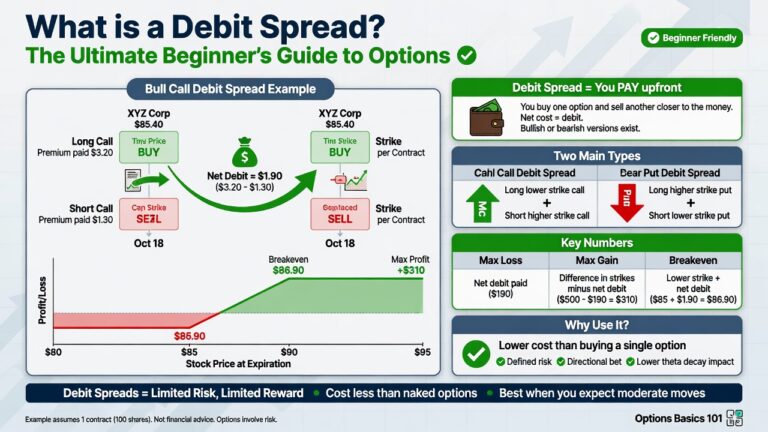
A TSLA post-earnings options debit spread is a directional trading structure where you simultaneously buy an in-the-money or at-the-money option and sell an out-of-the-money option of the same expiration date and type (calls or puts). Options traders use this vertical spread structure right after Tesla reports earnings to capture follow-through price expansion. By shorting the OTM strike against your long option, you substantially lower your total dollar outlay and hedge against post-earnings volatility collapse.
Why This Edge Works
Prior to Tesla earnings releases, option market makers bid up implied volatility to sky-high levels to price in potential gap risk. The moment earnings hit the market, option implied volatility collapses sharply across all strikes—an event known as IV crush. Retail traders holding naked single-leg options frequently lose 30% to 50% of their premium within minutes of the market open, even when TSLA moves in their favored direction. The debit spread layout neutralizes this exposure because the short option contract you sold deflates in IV at the same rate as the long option you bought. Furthermore, Tesla stock rarely finishes its post-earnings reaction in a single day; institutional investors require several sessions to recalibrate earnings models and reallocate capital, creating sustained multi-day directional momentum. Selling the higher strike contract finances your entry while capping your risk to the exact net debit paid.
The Setup Rules
- Wait for the Announcement: Never enter the position prior to the earnings announcement. Let the earnings release occur and wait for the first 30 minutes of regular market trading to pass.
- Establish the Post-Earnings Range: Mark the high and low price levels established during the initial 30 minutes of trading following the market open.
- Confirm Directional Alignment: Require a complete 15-minute candlestick close above the 30-minute range high for a Bull Call Spread, or below the 30-minute range low for a Bear Put Spread.
- Select Expiration Window: Choose option contracts with 14 to 30 Days to Expiration (DTE) to maintain balanced delta while avoiding severe near-term gamma fluctuations.
- Select Bullish Strikes: Buy the 40 to 50-delta Call (ATM) and sell the 20 to 25-delta Call (OTM).
- Select Bearish Strikes: Buy the 40 to 50-delta Put (ATM) and sell the 20 to 25-delta Put (OTM).
- Verify Net Debit Cap: Ensure the net debit paid does not exceed 40% of the total distance between the two option strike prices.
Free For Traders
The Options Cheat Sheet Thousands Of Traders Swear By
Calls, puts, spreads — one free download tells you the right options strategy for every market condition.

Entry Trigger
Trigger your buy order immediately when a 15-minute candlestick closes completely beyond the 30-minute post-earnings range boundary in the direction of the post-earnings gap.
Stop Loss & Profit Target
Place a hard risk exit when the net value of the spread loses 50% of your initial debit purchase cost; if you paid $5.00 net debit, exit the spread if its market value drops to $2.50. Set your profit target order at 80% to 90% of the total potential spread profit (calculated as strike width minus net debit), exiting prior to expiration week to eliminate pin risk and liquidity decay. This rule matrix delivers a structured minimum risk-to-reward profile of 1:1.5 to 1:2.5 on allocated trading capital.
Trade Walkthrough: What It Looks Like on a Chart
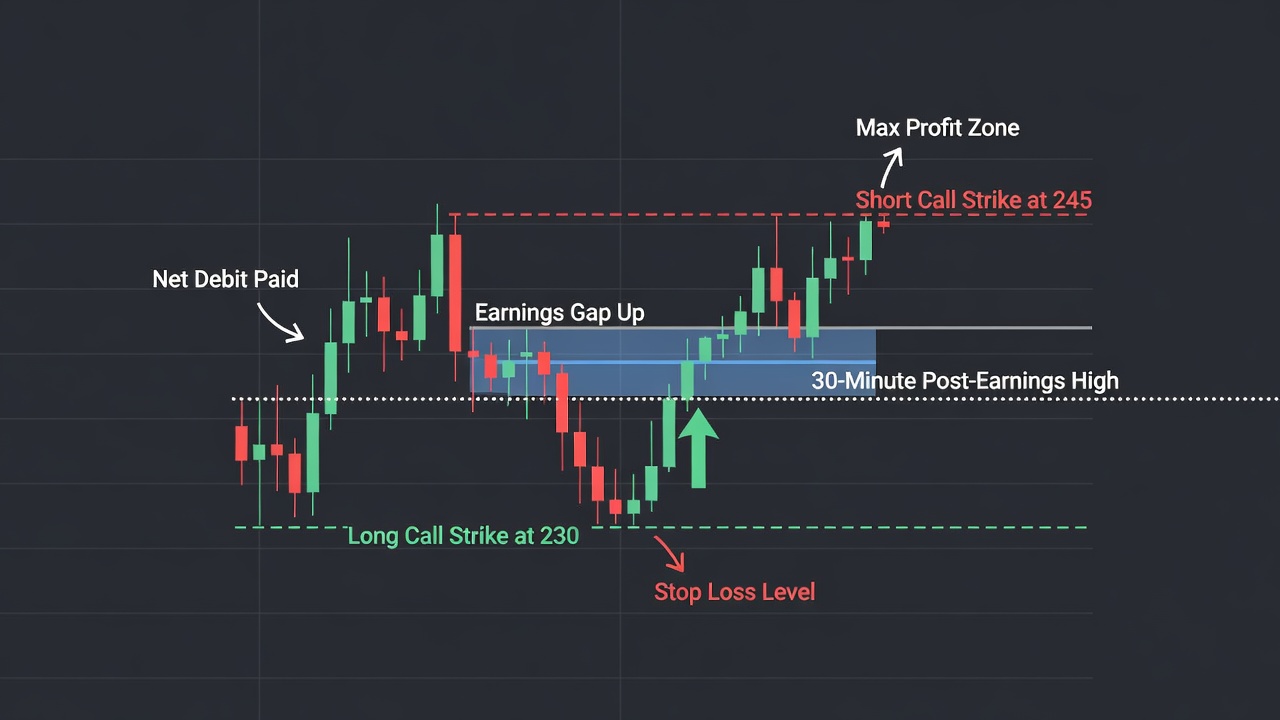
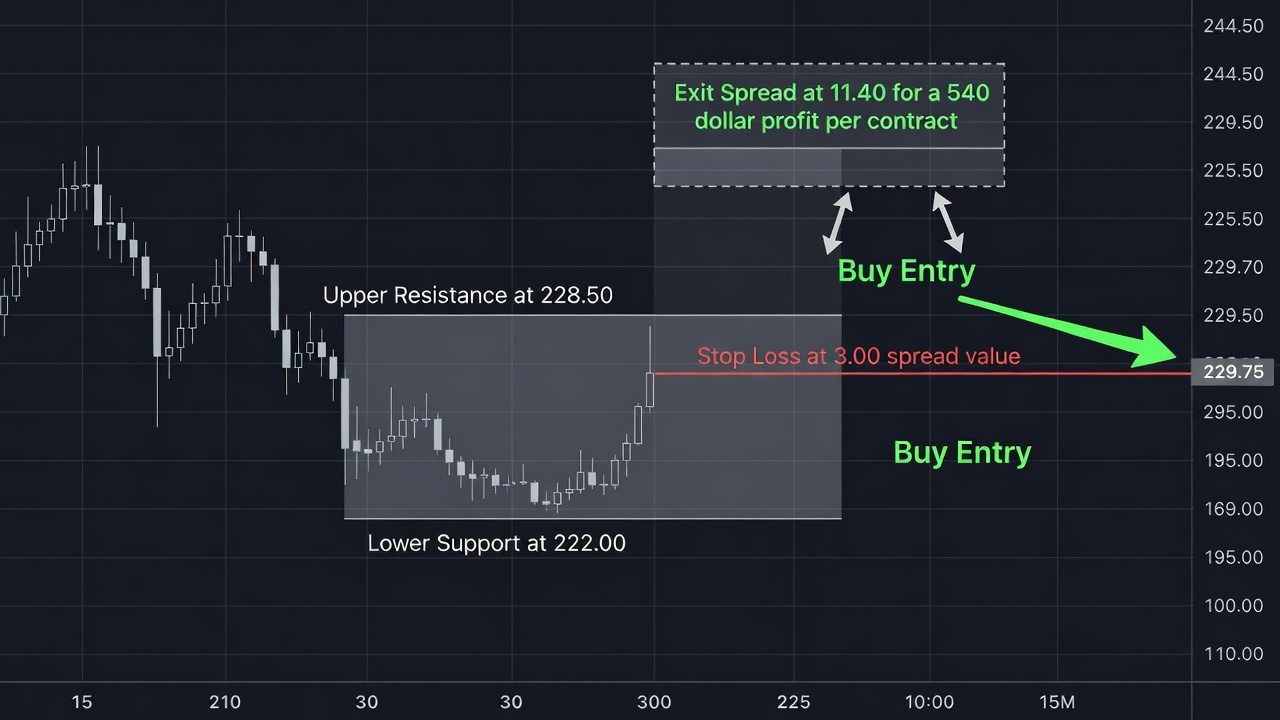
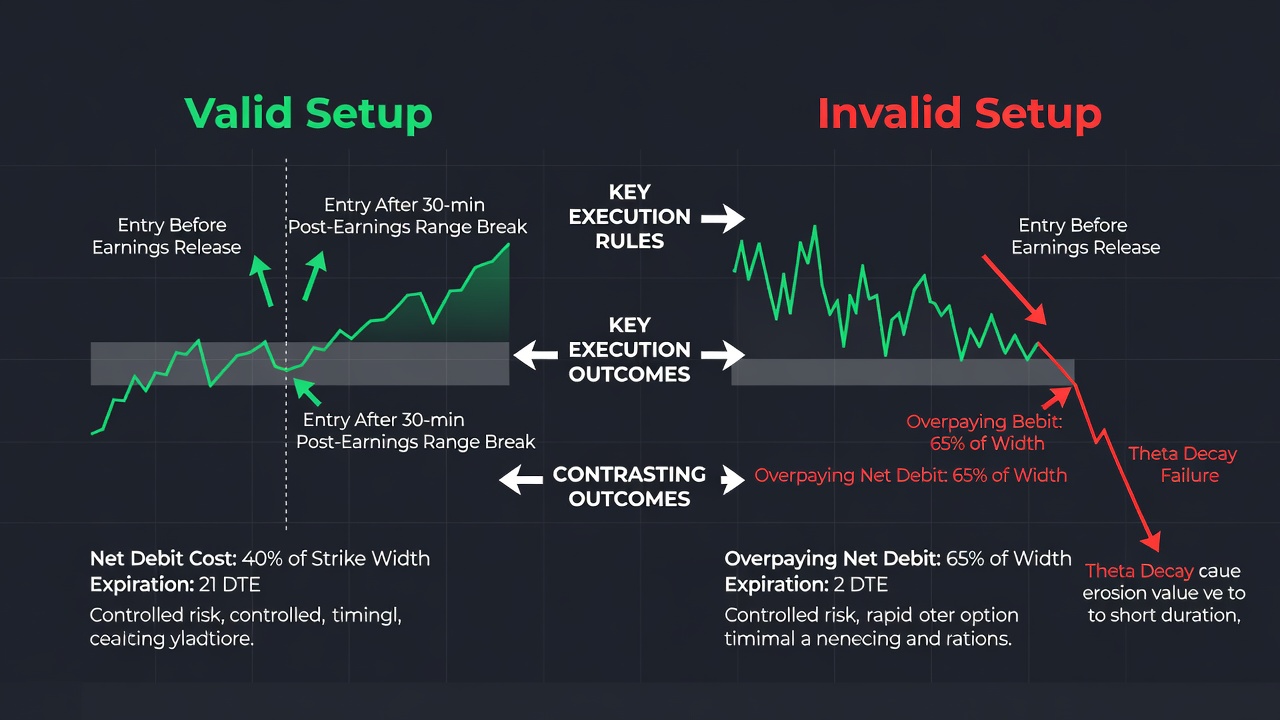
As you can see in the chart above, TSLA published earnings after the closing bell, causing the stock to gap higher from $210.00 to $225.00 in pre-market trading. During the first 30 minutes of regular market hours on Thursday morning, TSLA formed an initial morning high at $228.50 and support low at $222.00. At 10:00 AM EST, a strong 15-minute bullish candle closed at $229.75, signalling institutional buying momentum above the opening high.
We executed a Bull Call Debit Spread with 21 days until expiration: buying the $230.00 Call for $12.50 and simultaneously selling the $245.00 Call for $6.50. This resulted in a net debit entry of $6.00 ($600 per contract package). Maximum risk was hard-capped at $6.00, while the maximum potential reward was $9.00 ($15 strike width minus $6 debit). The stop loss was set to trigger if the spread trade value declined to $3.00. TSLA trended cleanly over the subsequent three trading sessions toward $244.00. On day four, with TSLA hovering near $244.50, the vertical spread value expanded to $11.40. We closed the position for an 80% gain on net capital ($5.40 net gain per contract package), completely insulating the account from IV crush.
Common Mistakes to Avoid
- Gambling Ahead of Earnings: Opening vertical debit spreads before the earnings press release exposes your trade to severe slippage and wide bid-ask spreads during market opens.
- Selecting Excessive Strike Widths: Utilizing strike distances over $30 on TSLA requires an abnormally large stock trajectory to reach peak profitability before expiration.
- Overpaying Net Debit: Cost basis exceeding 45% of the total strike distance ruins the mathematical risk-reward expectation of the edge.
- Trading Low Open Interest Legs: Choosing illiquid strike legs creates wide bid-ask friction, degrading your fill execution when closing multi-leg orders.
- Holding Option Spreads Into Expiration Friday: Retaining positions through expiration afternoon creates pin risk and unnecessary assignment complications.
From Find Better Trades
Consistent Income. Any Market Direction.
The Income Project’s low-risk debit spread system generates steady returns whether the market runs up, down, or sideways.

Quick Reference Checklist
- Has TSLA released earnings report and completed the initial 30 minutes of regular market trading? (Yes/No)
- Is the post-earnings initial 30-minute high and low clearly marked on your 15-minute chart? (Yes/No)
- Has a 15-minute candle closed cleanly outside the 30-minute initial boundary line? (Yes/No)
- Does the selected option expiration fall within the 14 to 30 DTE timeframe window? (Yes/No)
- Is the total net debit entry price equal to or less than 40% of the strike width? (Yes/No)
- Is a strict stop loss defined at a 50% discount of the original net debit cost? (Yes/No)
📈 Want More? Join Our Free Trading Community
- Trading Strategy Guides Telegram — daily strategy tips and market insights
- Find Better Trades Telegram — free trade signals delivered to your phone
- Find Better Trades on YouTube — live trade breakdowns and tutorials