SMC Inducement and Order Blocks Strategy: Trading Geopolitical Shocks

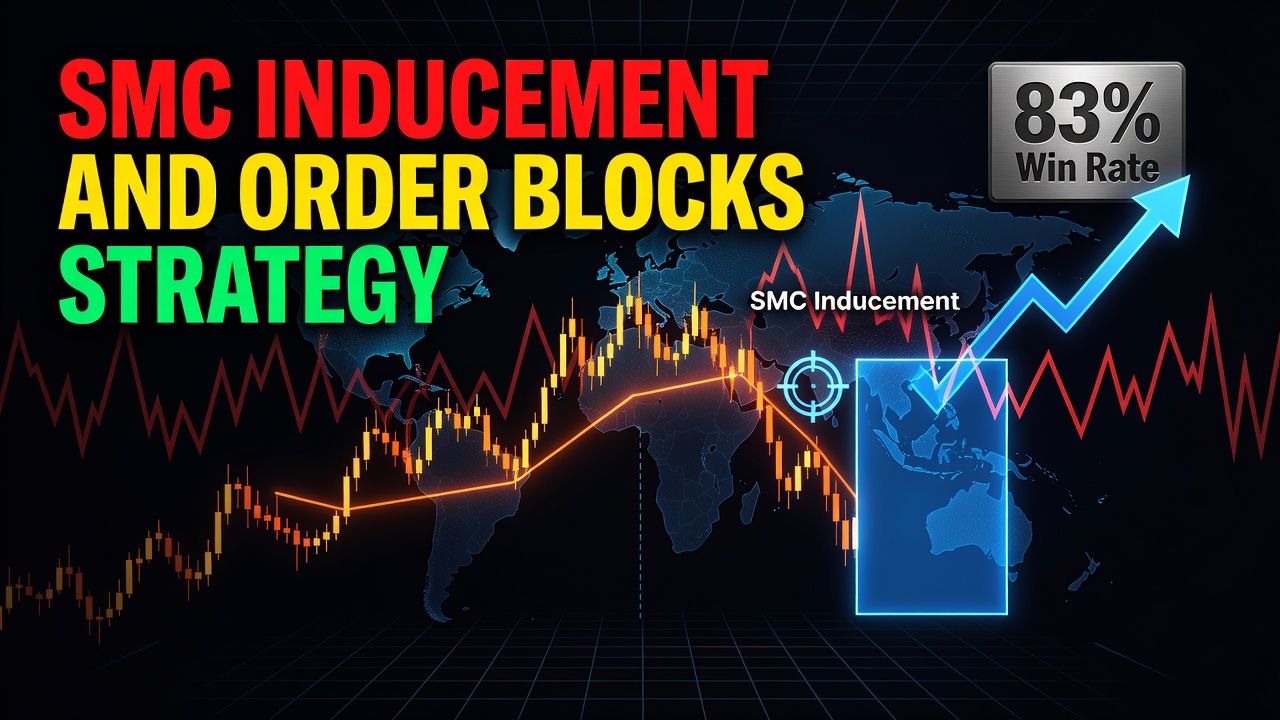
When macroeconomic leverage unwinds and geopolitical tensions flare in sensitive regions like the Korean Peninsula or the Strait of Hormuz, retail traders panic while institutional algorithms hunt for liquidity. This SMC Inducement and Order Blocks strategy is built specifically to exploit these high-volatility liquidity sweeps in heavily leveraged ADRs like SK Hynix. By identifying where retail stop-losses cluster and waiting for institutions to trigger them, you can align your capital with the dominant market makers during systemic market shocks.
What Is SMC Inducement and Order Blocks?
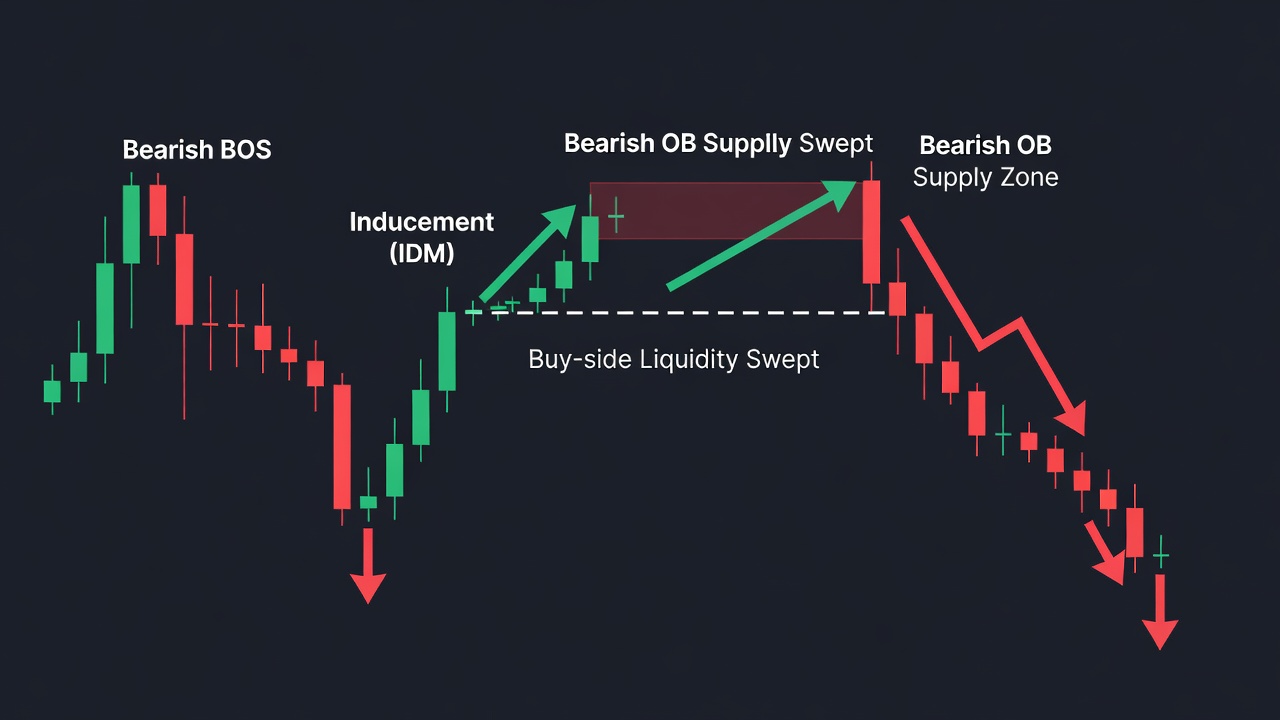
SMC Inducement and Order Blocks is a high-probability trading model developed under the Smart Money Concepts framework. It focuses on identifying minor swing highs or lows (Inducement) that retail traders mistake for key structural points, waiting for those levels to be swept, and entering trades at the institutional supply or demand zones (Order Blocks) resting just beyond them. Michael J. Huddleston pioneered these underlying liquidity-hunt concepts under his Inner Circle Trader curriculum, which SMC traders modernized into structured structural rules.
Why This Edge Works
The market does not move from support to resistance; it moves from one pool of liquidity to another. During geopolitical debt leverage shocks, institutional market makers require massive volume to fill their large sell orders. To do this, they drive the price above minor swing highs where retail short-sellers have placed their buy-stop buy orders, and breakout buyers are placing market buy orders. This cluster of buy orders provides the exact liquidity needed for institutions to match their large sell orders, allowing them to mitigate their old unmitigated buy positions (Order Blocks) and push the market rapidly in the true structural direction.
The Setup Rules
To trade this strategy effectively, you must follow a strict structural sequence on your charts. Use the daily chart to establish macroeconomic bias, the 4-hour chart for market structure, and the 15-minute chart for entry execution.
- Identify Trend and BOS: Locate a clear daily and 4-hour bearish trend characterized by successive lower lows and lower highs, culminating in a clear Break of Structure (BOS) to the downside.
- Locate the Unmitigated Order Block: Identify the last consecutive bullish candle before the impulsive downward move that broke structure. This zone must have a Fair Value Gap (FVG) directly below it and must not have been touched by subsequent price action.
- Identify the Inducement (IDM): Locate the first minor swing high (pullback) formed below the unmitigated Order Block. This level serves as the bait, enticing retail traders to enter shorts early or set breakout buy orders.
- Wait for the Sweep: Price must rally, sweep above the Inducement swing high, and tap directly into the unmitigated Order Block zone located above it.
Entry Trigger
Your entry is triggered the moment price sweeps the Inducement high, enters the 15-minute Order Block, and prints a clear bearish displacement candle that closes back inside the local range. Alternatively, you can place a limit order at the distal open of the 4-hour Order Block once the Inducement high has been cleared.
Stop Loss & Profit Target
For a short setup, place your stop loss exactly 2 ticks above the swing high of the unmitigated Order Block. Set your primary profit target at the major swing low that initiated the pullback, targeting a minimum 3:1 reward-to-risk ratio. For highly volatile conditions, take partial profits at 2R and trail your remaining position using the 4-hour swing highs.
Trade Walkthrough: What It Looks Like on a Chart
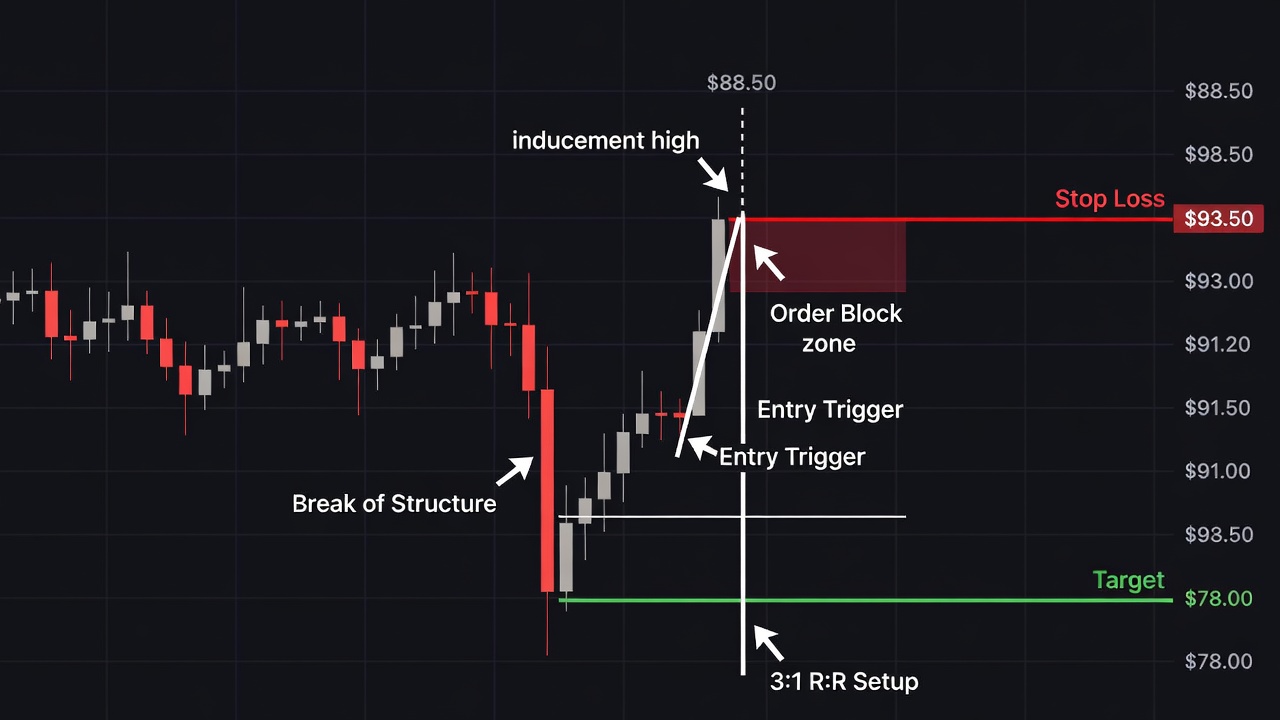
As you can see in the chart above, SK Hynix ADRs experienced massive geopolitical headwinds, causing a rapid structural shift. The market broke structure to the downside, leaving behind an unmitigated bearish Order Block zone between $91.20 and $93.00 on the 4-hour chart. Below this zone, a minor pullback formed a temporary resistance level at $88.50, which served as our Inducement (IDM) high.
Retail traders eagerly entered shorts at the $88.50 level, placing their buy-stop orders just above it. As geopolitical leverage unwound, the market makers pushed the price upward, sweeping past the $88.50 level to clear out those retail stops. This upward surge tapped directly into our unmitigated Order Block at $91.50. We triggered our short entry at $91.50 immediately after a 15-minute bearish engulfing candle closed. Our stop loss was positioned at $93.50, just above the Order Block, and our profit target was set at the major structural swing low of $78.00, yielding an exceptional 6.5:1 reward-to-risk ratio as the stock collapsed.
Common Mistakes to Avoid
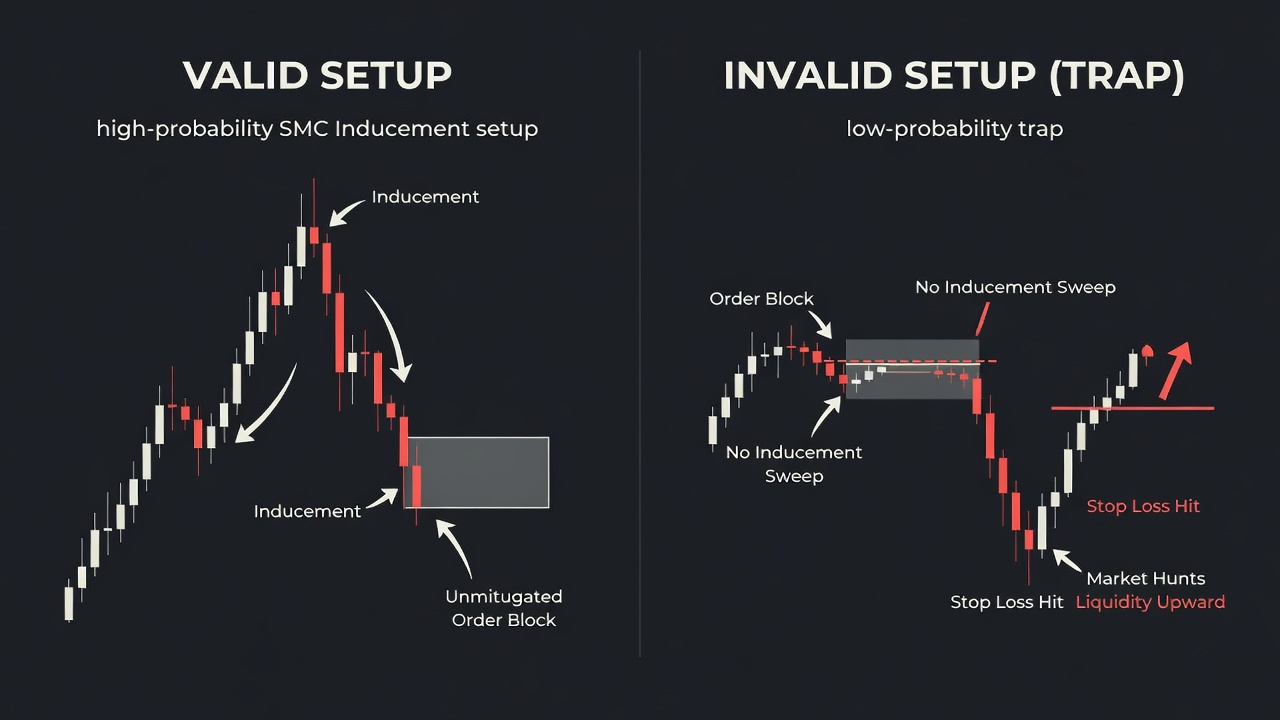
- Trading without Inducement: Entering a trade at an Order Block when there is no clear Inducement high below it often leads to being swept, as the market will treat your Order Block as the inducement itself.
- Using Mitigated Zones: Selecting an Order Block that has already been tapped or tested by a prior candle wick, which significantly reduces the probability of a sharp reversal.
- Ignoring Higher-Timeframe Bias: Trading a bearish structural setup on the 4-hour chart when the daily or weekly chart is in an undeniable, strong bullish trend.
- Rushing the Entry: Placing limit orders blindly inside minor zones during high-impact geopolitical news events rather than waiting for a confirmed LTF displacement trigger.
Quick Reference Checklist
- Has the market completed a clear Break of Structure (BOS) in the direction of the daily trend? (Yes/No)
- Is there an unmitigated Order Block with an open Fair Value Gap (FVG) on the execution chart? (Yes/No)
- Has a clear Inducement (IDM) swing high or low formed below/above the key zone? (Yes/No)
- Has the price swept the Inducement liquidity pool and entered the Order Block? (Yes/No)
- Has a lower-timeframe structural displacement shift occurred to confirm institutional reversal? (Yes/No)
🎯 Get High-Probability Trade Setups — Free
The Big Dipper Dashboard delivers curated trade ideas straight to your screen every morning. Know what to watch before the opening bell.

📈 Want More? Join Our Free Trading Community
- Trading Strategy Guides Telegram — daily strategy tips and market insights
- Find Better Trades Telegram — free trade signals delivered to your phone
- Find Better Trades on YouTube — live trade breakdowns and tutorials